 |
| Comet 67P/Churyumov-Gerasimenko. Image captured on August 3, 2014. Image Credit: ESA/Rosetta/MPS for OSIRIS Team MPS/UPD/LAM/IAA/SSO/INTA/UPM/DASP/IDA |
This is a very ambitious mission. Comet 67P is tiny, less than 3 miles in diameter, so it doesn't have very much gravity to help Rosetta fall into orbit. The engineers had to very carefully plan Rosetta's trajectory so that it would slow down and fall into place right next to the comet. The spacecraft flew 12 years before it reached its destination! Watch the video below to see Rosetta's complex path.
Rosetta has been busy taking pictures of the comet from all angles, so that scientists can learn about its composition, and pick a good landing sight for Philae. Philae will analyze the chemical composition of the comet, and look for organic compounds.
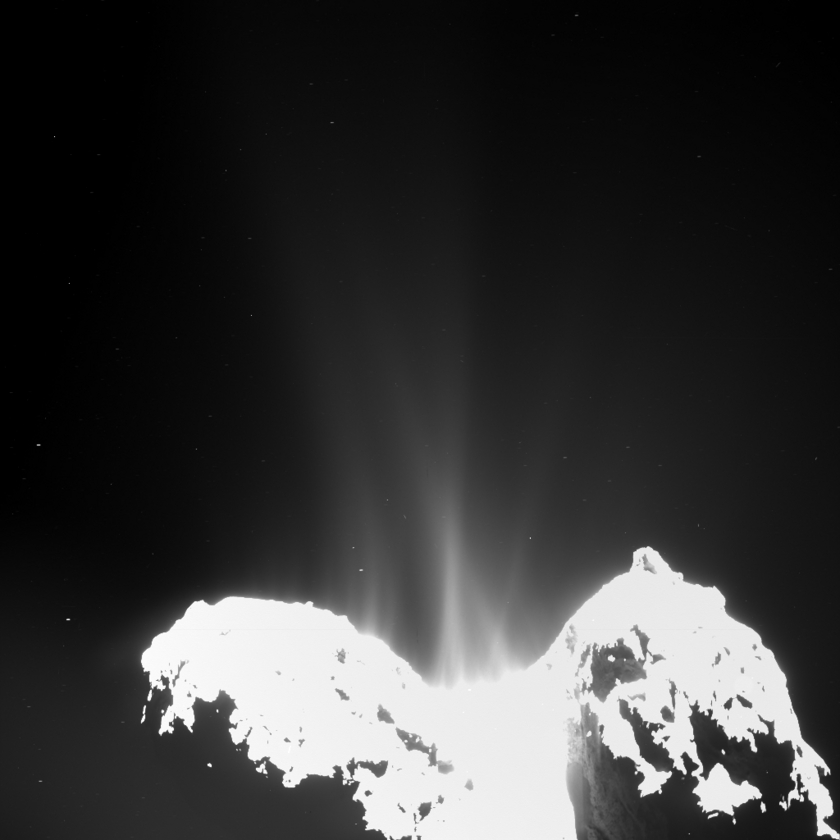 |
| The comet started to jet in September. It will be a treat to watch the tail develop as it gets closer to the Sun! Image credit: ESA / Rosetta / DLR / MPS for OSIRIS Team MPS / UPD / LAM / IAA / SSO / INTA / UPM / DASP / IDA |
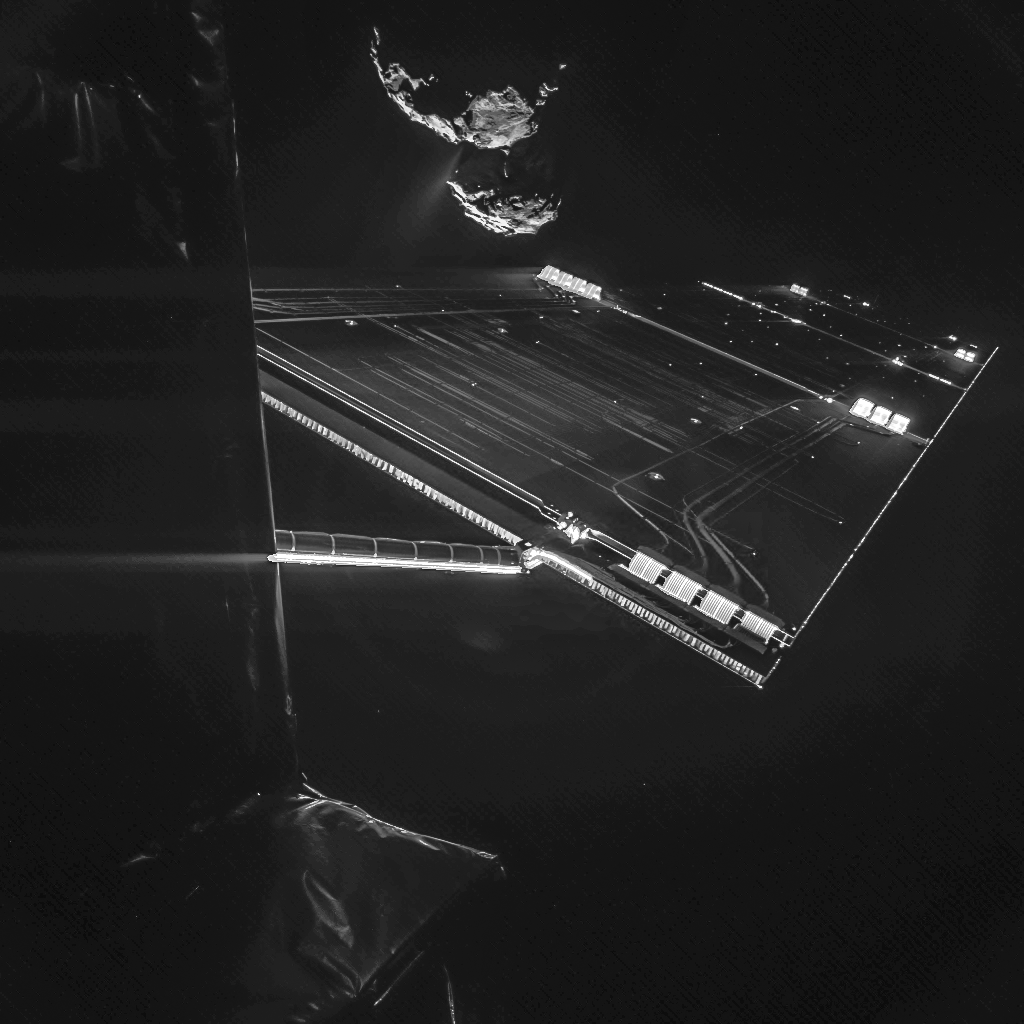 |
| Rosetta's selfie, with Comet 67P in the background. Image Credit: ESA/Rosetta/Philae/CIVA |
Comets are old. They are leftovers from the formation of the Solar System. They are also full of frozen water, and some have been shown to contain complex organic compounds - amino acids, the building blocks of protein. Scientists think that comets delivered water to a young Earth, and possibly, seeded the planet with organic molecules. If we learn more about comets, we might be able to better understand the origin of water life on Earth. We might also better understand the formation of the Solar System.
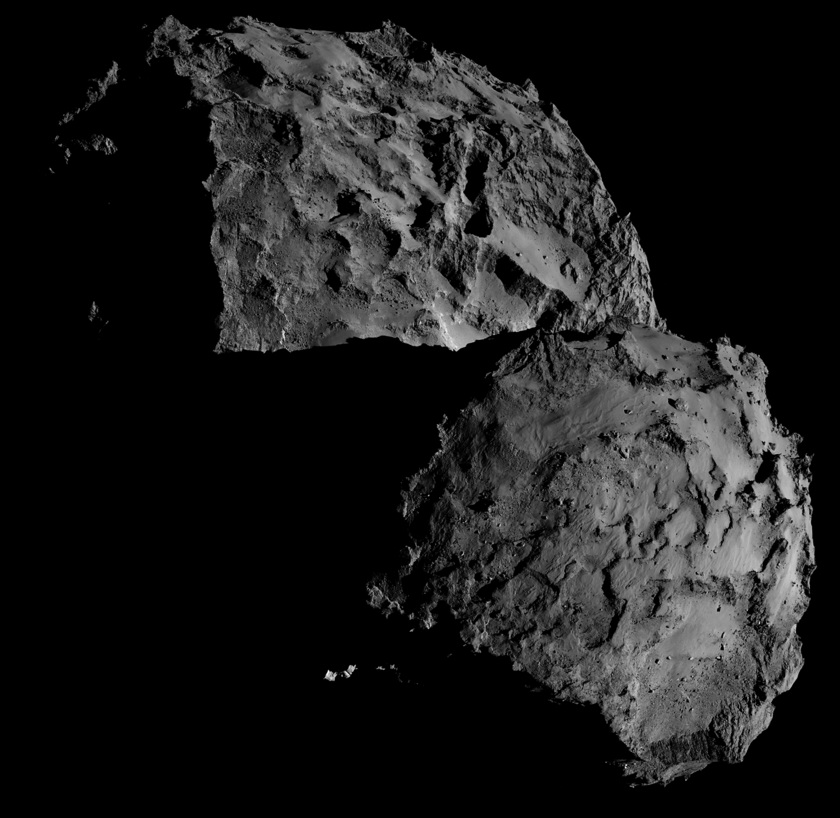 |
| Such a pretty comet. Image Credit: ESA / Rosetta / NavCam / Stuart Atkinson |
If you would like to follow along with Philae as it lands on the comet November 12, you can watch on NASA TV. It will land at approximately 6 AM CST.
As always, you can learn more about current space news at the Peoria Riverfront Museum's Dome Planetarium, where we teach about space and science every day. Click here for showtimes and descriptions. And if you are interested in learning more about Rosetta and other current space science, join us for Wine and Cheese Under the Stars on November 21!

No comments:
Post a Comment