 |
| Mmm... pumpkins. |
Both spring and fall start with the equinoxes, the two days of the year when there is an equal amount of daylight and nighttime. We have solstices and equinoxes (or in other words, seasons) because of the Earth's tilt on its axis. As the Earth orbits the Sun, usually one hemisphere is tilted toward the Sun while the other is tilted away. When the Northern Hemisphere is tilted toward the Sun and it is summer, the Southern Hemisphere is tilted away and is in winter, and vise versa. The equinoxes occur when the Earth is at a point in its orbit where both hemispheres get equal amounts of sunlight - neither is tilted more towards the Sun than the other. On the equinox, the Sun rises due east, and sets due west, giving everyone equal amounts of day and night.
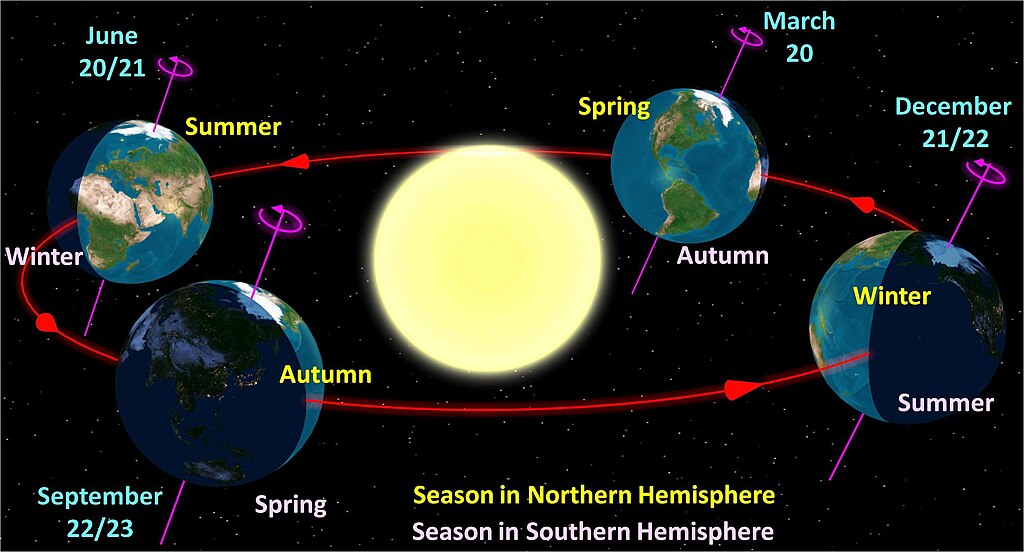 |
| Diagram of the Earth's seasons as seen from the North. The most opposite is the Autumnal Equinox - both hemispheres receive equal amounts of direct sunlight. (Clearly not to scale.) Image Credit: Wikipedia Commons |
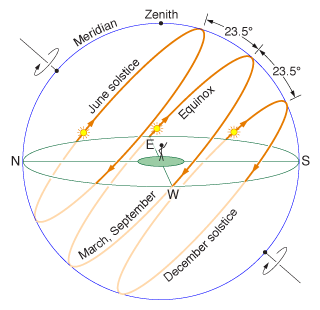 |
| The Sun's path across our sky gives us longer days in the summer and shorter days in the winter. On the Equinoxes, day and night are equal! Image credit: Daniel V. Schroeder |
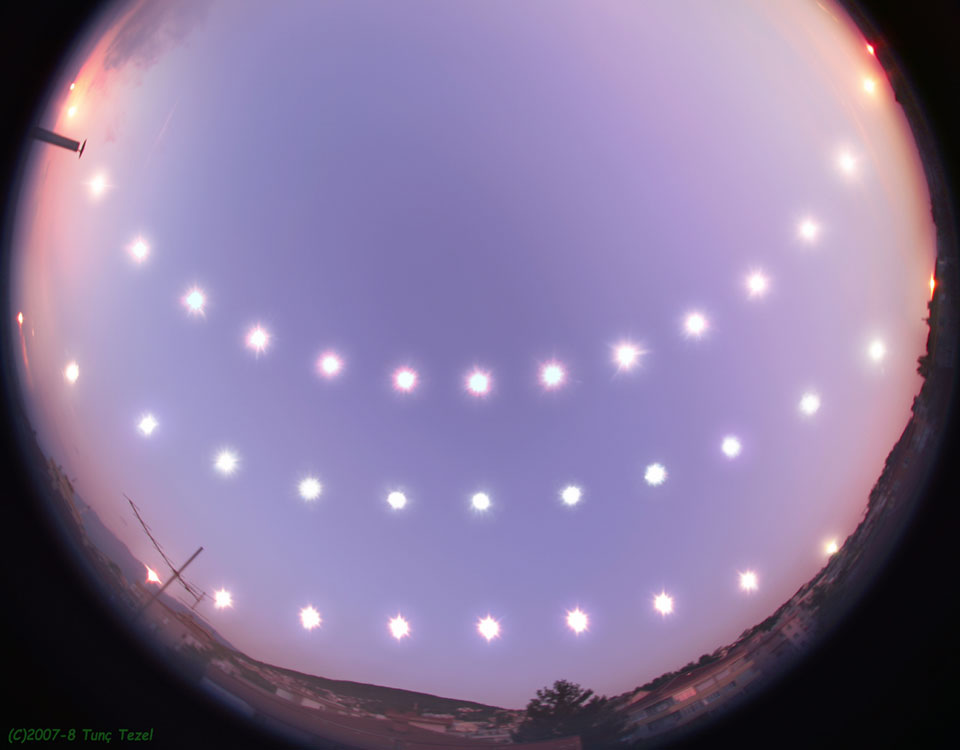 |
| Hourly images of the Sun were captured in Bursa, Turkey, on key days from solstice, to equinox, to solstice. The lower path is shorter and in winter, the higher path is longer and in summer. The middle path is spring or fall. Image credit: APOD and Tunc Tezel |
There are equinoxes on other planets and moons too. At Saturn's equinox, the gas giant's rings point directly at the Sun. They appear to be just a thin sliver (although they are as thick as a football field) and cast no shadows on the planet.
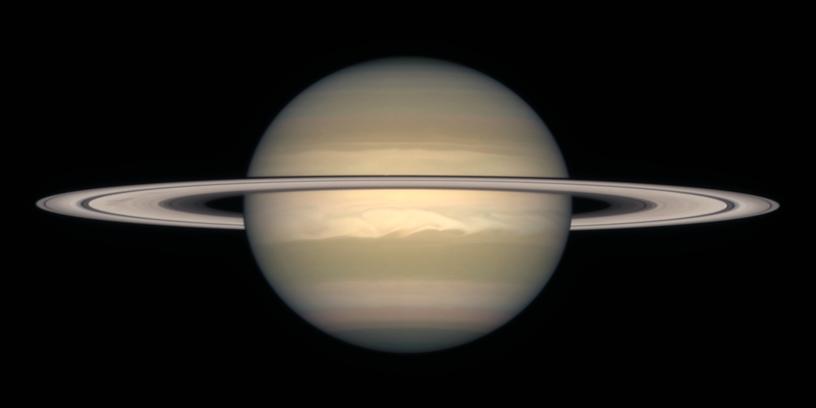 |
| Autumnal Equinox on Saturn. Image Credit: NASA and The Hubble Heritage Team |
 |
| Looking from Earth, Saturn's rings seem to disappear at its Equinox, but since Cassini is orbiting the planet, it was able to capture this gorgeous sweeping view. Image Credit: Cassini Imaging Team |
 |
| Since the rings are edge on to the Sun, Cassini can capture some very detailed views. These towering icy peaks in the rings are 1.6 miles high and are impossible to see except at the Equinox Image Credit: Cassini Imaging Team |
No comments:
Post a Comment