Look towards the southwest after sunset, and you can easily see what looks like two bright stars, one orange-red and one white, close together. What looks like two bright stars are really two bright planets, Mars and Saturn! See the star chart below, set for Peoria at 10 PM.
 |
| Click for larger image. Image Credit: Stellarium. |
 |
| Mars is in the constellation of Virgo the Maiden, and Saturn can be found in Libra the Scales this summer. Image Credit: Stellarium. |
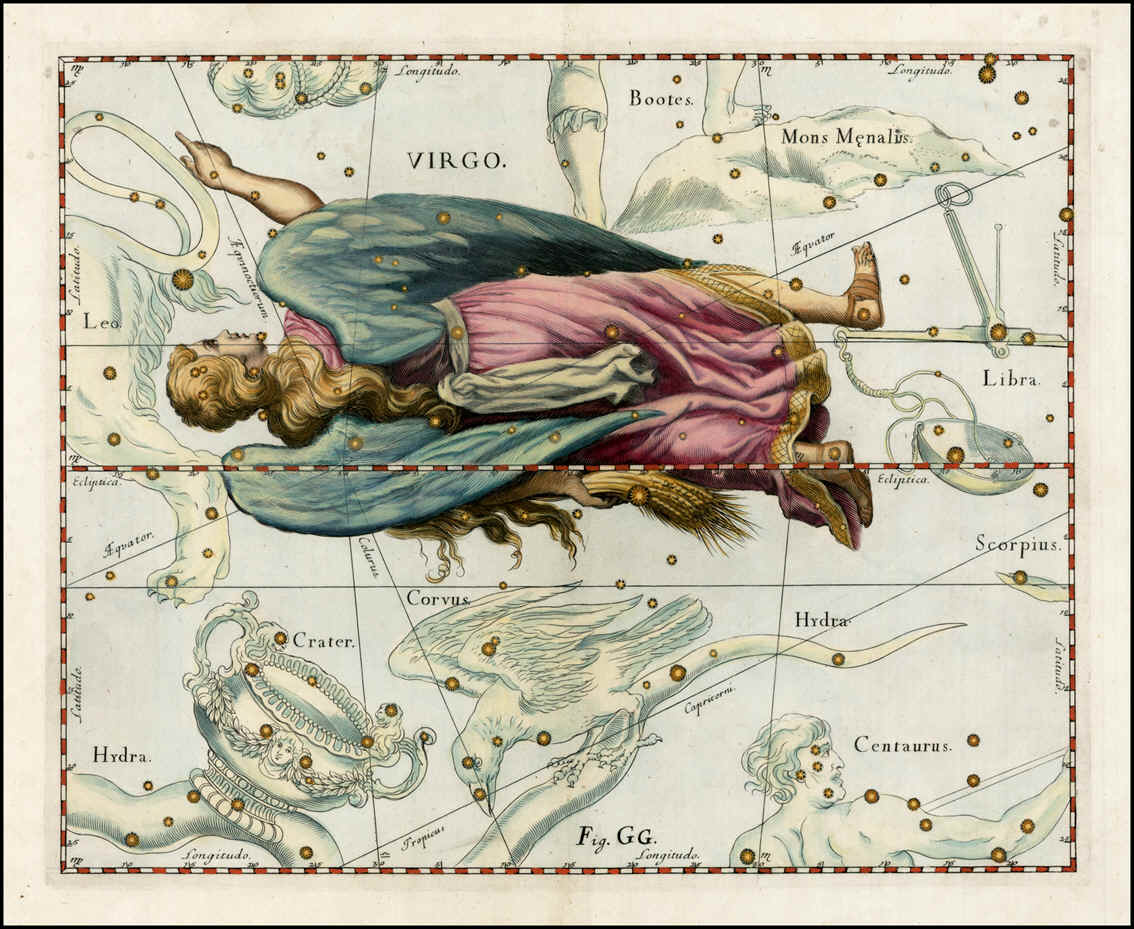 |
| Johannes Hevelius created one of the best loved collections of constellation drawings in 1687, called Firmamentum Sobiescianum sive Uranographia. The beautiful images are now in the common domain. You can find most of them here. |
 |
| Also a drawing by Johannes Hevelius. |
 |
| Do you know about the Mars Curiosity Rover yet?! If you don't, stop reading this and look up some of its pictures. Curiosity took this picture of itself after completing its first Martian year looking for evidence that liquid water existed on Mars in the past. Image Credit: NASA/JPL-Caltech/MSSS |
 |
| Hebes Chasma, a canyon near Valles Marineris. Image Credit: ESA/DLR/FU Berlin |
 |
| This image shows the changing soil patterns over a year's time, most likely caused by dry ice. Image Credit: NASA/JPL-Caltech/Univ. of Arizona |
 |
| Martian sand dunes, covered in dry ice. Image Credit: NASA/JPL-Caltech/Univ. of Arizona |
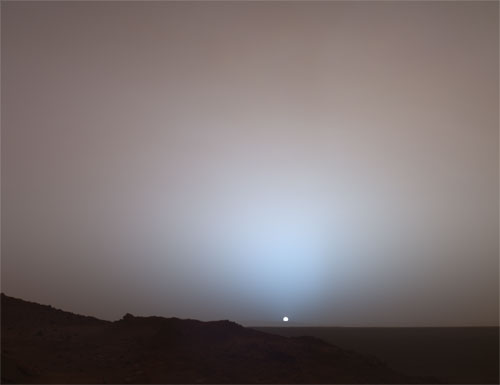 |
| The rover Spirit captured this gorgeous natural light image of a sunset on Mars in 2005. Image Credit: NASA/JPL/Texas A&M/Cornell |
And catch the latest news about the universe at our upcoming evening event, Deep Space Wine!
No comments:
Post a Comment