 |
| Image Credit: Wikipedia Commons |
Of course, the word month comes from moon too - you could think of it as moonth. The moon takes 29.5 days to go from full moon to full moon on average. Back in the 4th century BCE, the people of the Greek isles based their calendars on the lunar cycle. The Roman calendar was based on these calendars, with twelve months in a year, each with about 30 days. Our modern calendar is still based on these original calendars, and so still tied to the cycle of moon phases.
I hope you caught the Moon right next to Mars Saturday night, and in between Mars and Saturn Sunday night! If you missed it, look tonight to find the moon to the left, or east of Saturn.
By the way, here are some great high resolution photos of the moon from the Lunar Reconnaissance Orbiter, or LRO.
 |
|
10,000
feet Apennine mountains to the east, and 600 feet deep Hadley Rille valley to
the west. Image Credit: NASA/GSFC/Arizona State University |
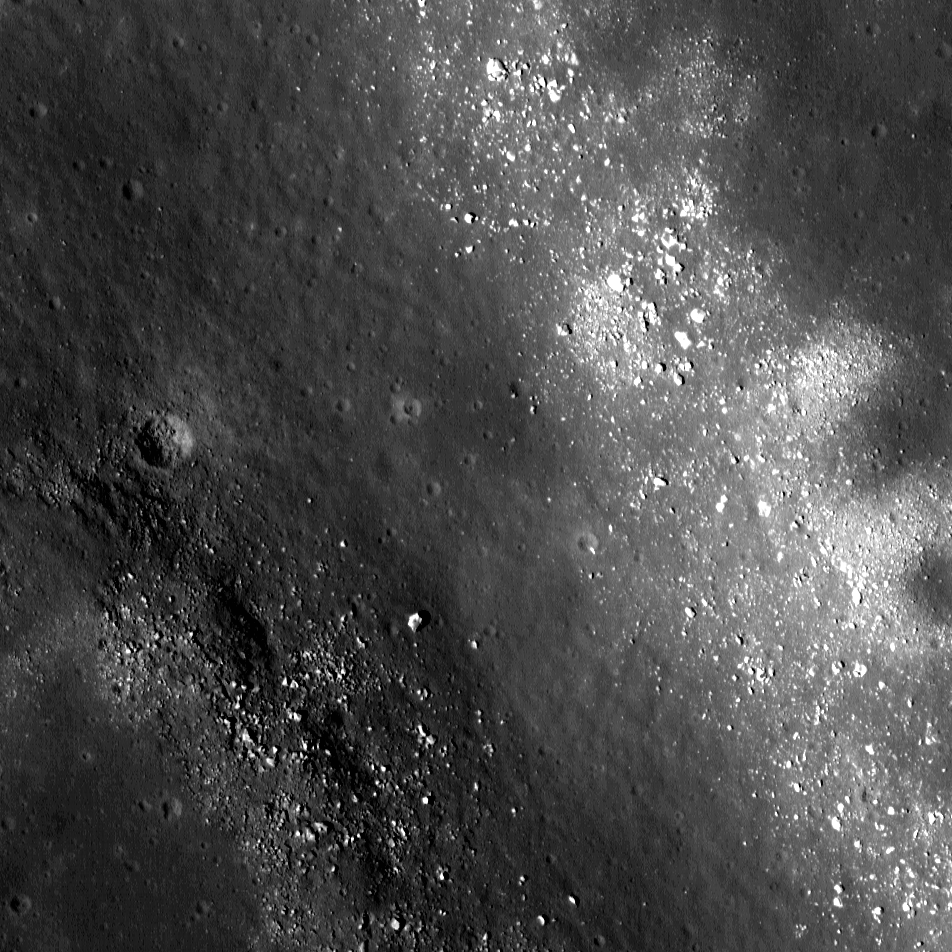 | |||
| Rima Suess, a long depression carved long ago by rivers of lava, is peppered with boulders and rocks. Image Credit: NASA/GSFC/Arizona State University |
 | |
|
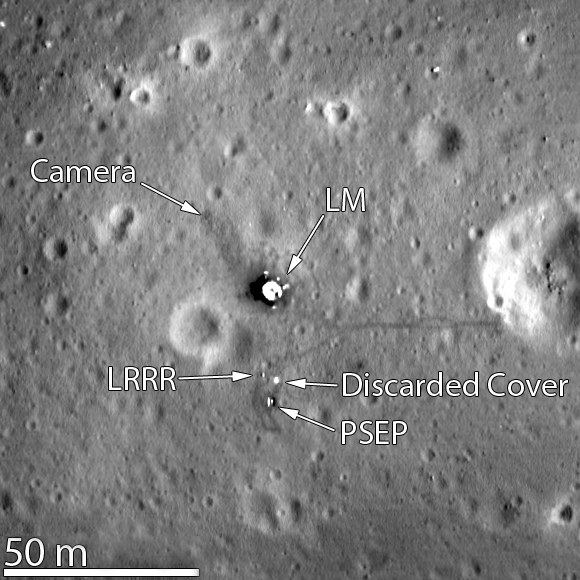 |
| Apollo 11 landing site and materials left behind. Image Credit: NASA/GSFC/Arizona State University |
 |
|
Full map of the near
side of the Moon. Click here to zoom in for excellent detail. Seriously,
try it!
Image
Credit: NASA/GSFC/Arizona State University
|
 |
|
Full map of the far side
of the Moon. There is no dark side of the moon, just a side that we don't
see. Again, click here for a very cool zoomable map.
Image
Credit: NASA/GSFC/Arizona State University
|
No comments:
Post a Comment